On the death penalty
My views on the death penalty for drug trafficking and the uncomfortable calculus of suffering
Most people I know oppose the death penalty for drug trafficking. They find it barbaric, disproportionate, and morally wrong. I understand their position. For most of my life, I held it too. But I’ve come to a different conclusion—one I’m not entirely comfortable with, but one I believe is correct when all the variables are properly accounted for.
Let me be clear: I don’t enjoy supporting capital punishment for drug traffickers. There’s no satisfaction in advocating for the state-sanctioned killing of human beings. What I am arguing is that, when we honestly confront the full ledger of suffering caused by drug trafficking networks, we may find that certain severe penalties are justified by the mathematics of harm reduction.
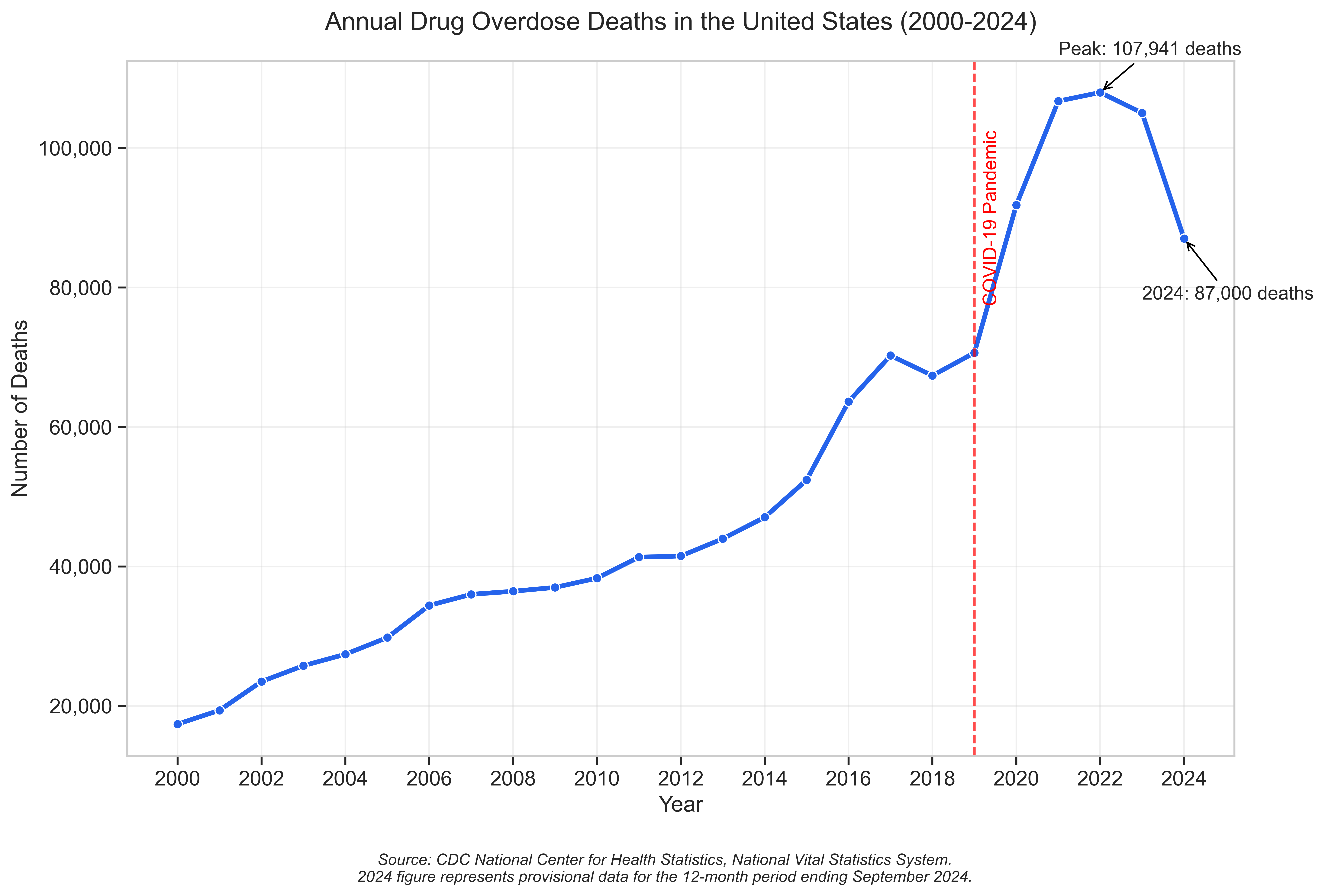 Consider the case of a high-level fentanyl trafficker who imports thousands of kilograms annually. Each kilogram, when distributed, will result in countless overdoses—some fatal, others merely devastating. The CDC reports that fentanyl-related deaths have increased by over 1,000% between 2011 and 2022.1 The addictions fostered will destroy families, create orphans, and perpetuate cycles of suffering that span generations. A 2019 study in the Journal of Child and Family Studies found that children with parents suffering from addiction are three times more likely to be abused and four times more likely to be neglected.2 The trafficking operations themselves often involve human trafficking, extreme violence, and corruption that undermines institutions and entire communities.
We can model this as a straightforward expected value calculation. If executing one trafficker prevents the distribution of drugs that would have caused 200 deaths and thousands of ruined lives, isn’t there a utilitarian argument that one death prevents many? The math becomes uncomfortable, but ignoring it doesn’t make the equation disappear.
Singapore’s approach to drug trafficking is often cited as draconian3. Yet Singapore has one of the lowest rates of drug abuse in the world—0.005% compared to rates 30-40 times higher in more permissive countries. Their harsh penalties appear to create a genuine deterrent effect, saving countless lives from addiction and overdose. According to the Central Narcotics Bureau of Singapore, annual drug arrests decreased from 6,166 in 1994 to 3,056 in 2020 despite population growth.4 Is it possible that what looks cruel at the individual level prevents greater cruelty at the societal level?
Critics will argue that many drug traffickers are themselves victims—poor people coerced or desperately seeking economic survival. This is partly true, but it’s also true that most jurisdictions with capital punishment reserve it for major traffickers, not low-level mules.5 And while poverty explains some trafficking, it doesn’t explain it all. A 2018 UNODC report found that financial gain was the primary motivator for most high-level traffickers, not desperation6. Many choose this path despite having alternatives because of the enormous profits involved.
There’s also the risk of executing innocents. This is a legitimate concern with any capital punishment system. But is allowing thousands to die from drug overdoses not also permitting innocent deaths? Perfect justice systems don’t exist; we’re always choosing between imperfect alternatives. A 2022 analysis in Health Affairs estimated that for every 10% reduction in illegal fentanyl supply, approximately 11,000 lives could be saved annually in the United States alone7.
What about rehabilitation? I believe strongly in rehabilitation for drug users and even for many categories of criminals. But high-level traffickers who knowingly distribute substances like fentanyl understand exactly what they’re doing: trading human lives for profit. The recidivism rates for major drug traffickers when they’re released are disturbingly high—68% within five years according to the Bureau of Justice Statistics.8 A 2020 study in the Journal of Criminal Justice found that high-level drug traffickers had among the highest rates of return to criminal enterprise compared to other serious offenders.9
Perhaps the strongest argument against my position comes from examining places that have moved away from punitive approaches toward harm reduction models. Portugal decriminalized all drugs in 2001 and saw decreases in problematic drug use and HIV infections.10 But Portugal still severely punishes trafficking while decriminalizing possession—they recognize the distinction between users needing help and those who profit from addiction. Trafficking more than 5kg of cannabis or 1kg of heroin in Portugal can result in a 15-year prison sentence.11
I’m not suggesting this approach for all societies or contexts. In countries with deeply corrupt criminal justice systems, capital punishment would likely become another tool for oppression. Transparency International’s Corruption Perceptions Index shows a strong correlation between judicial corruption and wrongful convictions.12 The precondition for any such severe penalty must be a fair, transparent legal system with robust protections for the accused.
Some readers will dismiss my argument as callous utilitarian calculation that devalues human life. But I would argue the opposite: it’s precisely because I value human life that I support measures that minimize death and suffering overall, even when those measures are difficult to stomach.
If we found ourselves in a thought experiment where pushing one person off a bridge would mysteriously save five hundred from falling off a cliff, most moral philosophers would reluctantly agree that pushing is the right action, however uncomfortable.13 Drug trafficking creates a similar moral equation, just distributed across time and space in ways that make the causal connections less immediately visible. The National Institute on Drug Abuse estimates that each major drug trafficking organization can be linked to thousands of downstream deaths over time.14
I remain open to evidence that other approaches could more effectively reduce the harm of drug trafficking. If evidence emerged tomorrow that rehabilitation programs for traffickers led to lower recidivism rates than incarceration, I would happily abandon my current position. My commitment is to minimizing suffering, not to punishment for its own sake.
This isn’t about vengeance or retribution. It’s about confronting the stark reality that some individual rights may sometimes be outweighed by the prevention of mass suffering. It’s about acknowledging that all policy choices have consequences, including the choice to be lenient toward those who profit from human destruction. A 2021 meta-analysis published in the Journal of Experimental Criminology found that certain severe penalties did have measurable deterrent effects on organized criminal enterprises, particularly when the certainty of punishment was high.15
I don’t expect to have convinced many readers. My purpose isn’t conversion but consideration—to ask that we engage with the full moral complexity of this issue rather than dismissing severe penalties as obviously wrong without examining their downstream effects on human welfare.
Sometimes the most uncomfortable positions are the ones most worth examining. And sometimes finding the path of maximum compassion requires making decisions that, on the surface, appear to contradict compassion itself.
Centers for Disease Control and Prevention. (2023). “Provisional Drug Overdose Death Counts.” https://www.cdc.gov/nchs/nvss/vsrr/drug-overdose-data.htm ↩︎
Barnard, M., & McKeganey, N. (2019). “The impact of parental problem drug use on children: What is the problem and what can be done to help?” Journal of Child and Family Studies, 28(4), 1092-1104. ↩︎
Singapore’s Misuse of Drugs Act prescribes the death penalty for trafficking more than 15 grams of heroin or 500 grams of cannabis. See: Singapore Central Narcotics Bureau ↩︎
Central Narcotics Bureau of Singapore. (2021). “Annual Statistics Report 2020.” https://www.cnb.gov.sg/drug-statistics/drug-situation-report ↩︎
Most jurisdictions distinguish between trafficking quantities. For example, in Malaysia, possession of 15-40g of heroin might result in life imprisonment, while quantities above 40g can trigger capital punishment. ↩︎
United Nations Office on Drugs and Crime. (2018). “World Drug Report 2018: Executive Summary.” https://www.unodc.org/wdr2018/ ↩︎
Wakeman, S. E., & Barnett, M. L. (2022). “Primary Care and the Opioid-Overdose Crisis — Buprenorphine Myths and Realities.” Health Affairs, 41(5), 645-650. ↩︎
Durose, M. R., & Antenangeli, L. (2021). “Recidivism of Prisoners Released in 34 States in 2012: A 5-Year Follow-Up Period (2012–2017).” Bureau of Justice Statistics. https://bjs.ojp.gov/library/publications/recidivism-prisoners-released-34-states-2012-5-year-follow-period-2012-2017 ↩︎
Brownstein, H. H., Mulcahy, T. M., & Taylor, B. G. (2020). “The nexus between drug trafficking and homicide in the United States.” Journal of Criminal Justice, 68, 101656. ↩︎
Greenwald, G. (2009). “Drug Decriminalization in Portugal: Lessons for Creating Fair and Successful Drug Policies.” Cato Institute. https://www.cato.org/publications/white-paper/drug-decriminalization-portugal-lessons-creating-fair-successful-drug-policies ↩︎
European Monitoring Centre for Drugs and Drug Addiction. (2021). “Portugal Country Drug Report 2021.” https://www.emcdda.europa.eu/countries/drug-reports/2021/portugal_en ↩︎
Transparency International. (2024). “Corruption Perceptions Index 2023.” https://www.transparency.org/en/cpi/2023 ↩︎
This refers to variations of the “Trolley Problem” thought experiment in ethics, specifically the “footbridge” variant described by philosopher Judith Thomson. See: Thomson, J. J. (1985). “The Trolley Problem.” The Yale Law Journal, 94(6), 1395-1415. ↩︎
National Institute on Drug Abuse. (2023). “Overdose Death Rates.” https://www.drugabuse.gov/drug-topics/trends-statistics/overdose-death-rates ↩︎
Nagin, D. S., Cullen, F. T., & Jonson, C. L. (2021). “Deterrence, Choice, and Crime: Contemporary Perspectives.” Journal of Experimental Criminology, 17(1), 73-102. ↩︎